Barcelona proposal routes often mix polished restaurant floors with uneven Gothic Quarter stones, viewpoint steps, and sudden curb cuts. A romantic pin collapses if a twisted ankle or screaming blister hijacks the last 200 meters. This checklist treats footwear like ring custody and taxi windows: choose stability for the approach, plan a dinner swap if needed, and keep a blister kit without turning the walk into a gear expo.
If you cannot name what each of you will wear on the cobble approach, what changes before dinner, and where the blister kit lives before you leave the hotel, you are improvising mobility on the most emotional walk of the trip.
Build a footwear map for approach, kneel, and dinner
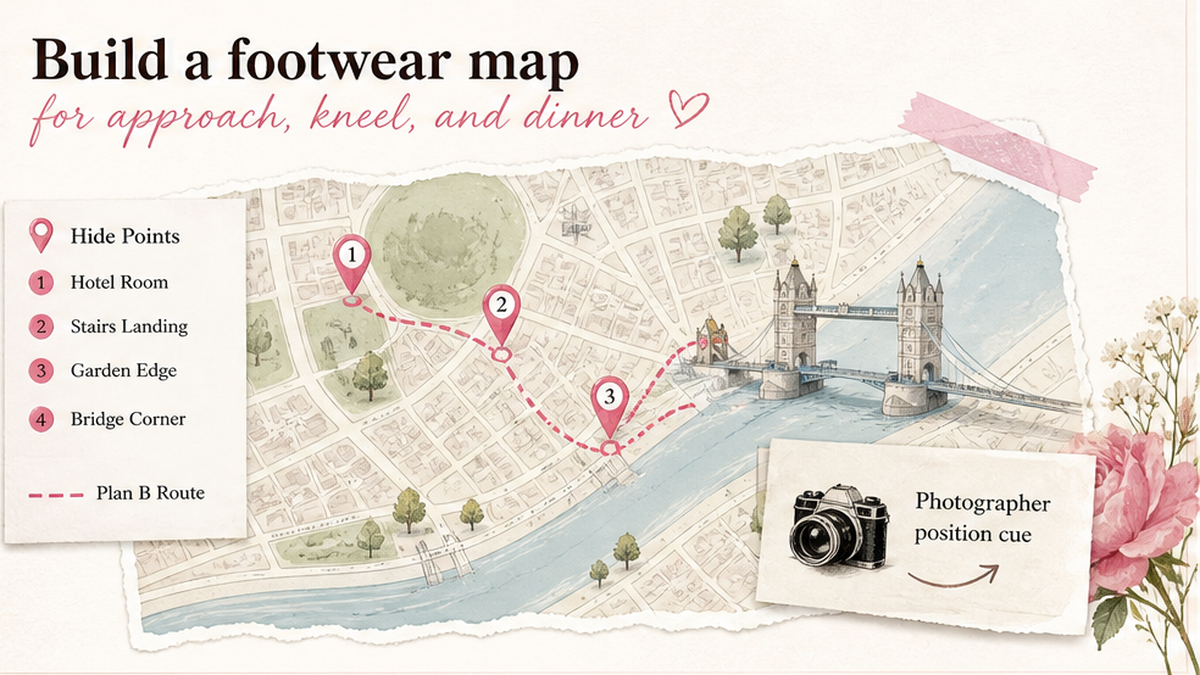
One pair rarely wins every surface. Split the day into three jobs so style for the toast does not sabotage the approach or the kneel.
- Approach pair: closed toe, grippy sole, broken-in. Prefer a low profile that still clears wet stone and metro stairs. Pair with your stairs and mobility buffer if the pin sits uphill.
- Kneel surface: proposer shoes need lateral stability and a sole that will not skate on polished stone or grit. Avoid brand-new stiff leather that bites mid-walk.
- Partner heel risk: if your partner loves heels for dinner photos, plan a flat or low block for the cobble segment, then a discrete swap near the restaurant—not a surprise stilettos climb from the metro.
- Hard avoid: brand-new unbroken shoes, slick leather soles on wet stone, flip-flops on hills, and “we will just tough it out” when a blister already started on scout day.
On scout day, walk the real approach in the day-of pairs for at least the last 15 minutes of the route. If either of you is already favoring a foot, redesign before you book the photographer window.
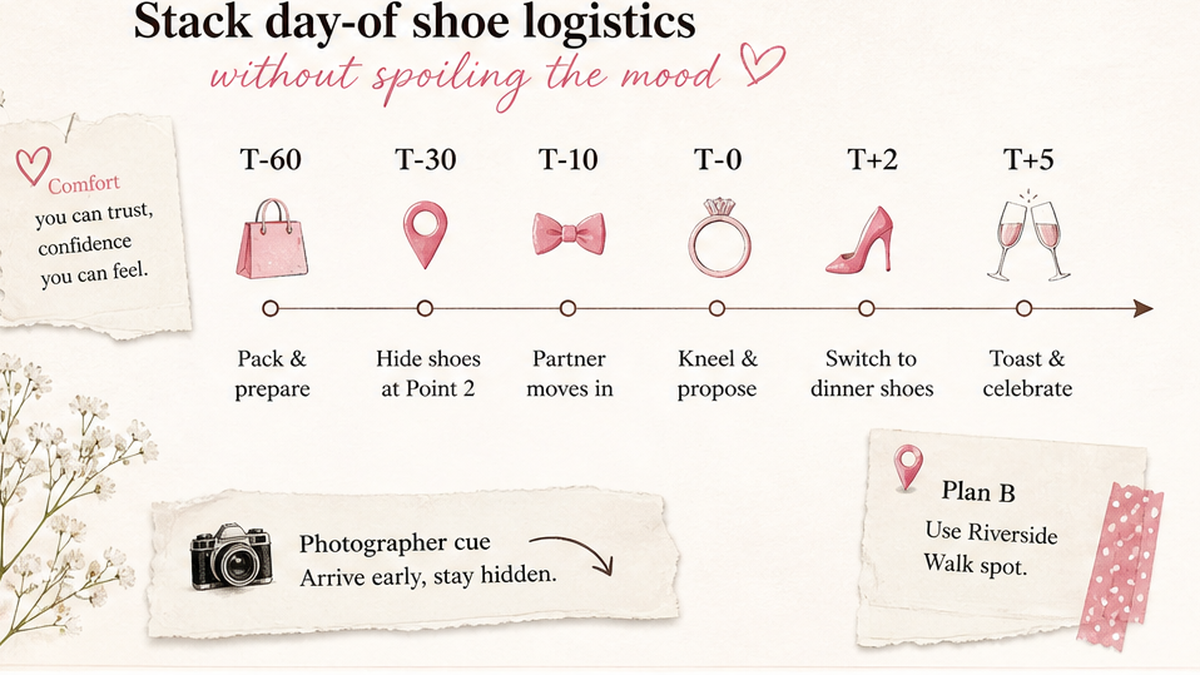
Stack day-of shoe logistics without spoiling the mood
| Plan element | Strong default | Why it protects the ask |
|---|---|---|
| Proposer shoes | Broken-in sneakers or grippy derby/loafers with a real tread | Stable kneel, quieter steps, fewer slips on grit |
| Partner approach shoes | Comfortable flats, trainers, or low block heels already worn in | Reduces ankle rolls on uneven stone before emotions spike |
| Dinner upgrade | Helper or small bag carries heels/dress shoes for a cafe-side swap | Photos and toast look sharp without walking 2 km in unstable shoes |
| Blister kit | Two bandages, one alcohol wipe, tiny tape roll in helper pocket | A hot spot fixed in 90 seconds beats limping through the pin |
| Wet-stone rule | After rain, prefer rubber tread and slower tempo on downhill exits | Exit aftercare often fails on slippery descents, not at the kneel |
| Socks and liners | Seamless socks the proposer already trusts; spare liner in helper bag | Prevents mid-route sock changes that look frantic on camera |
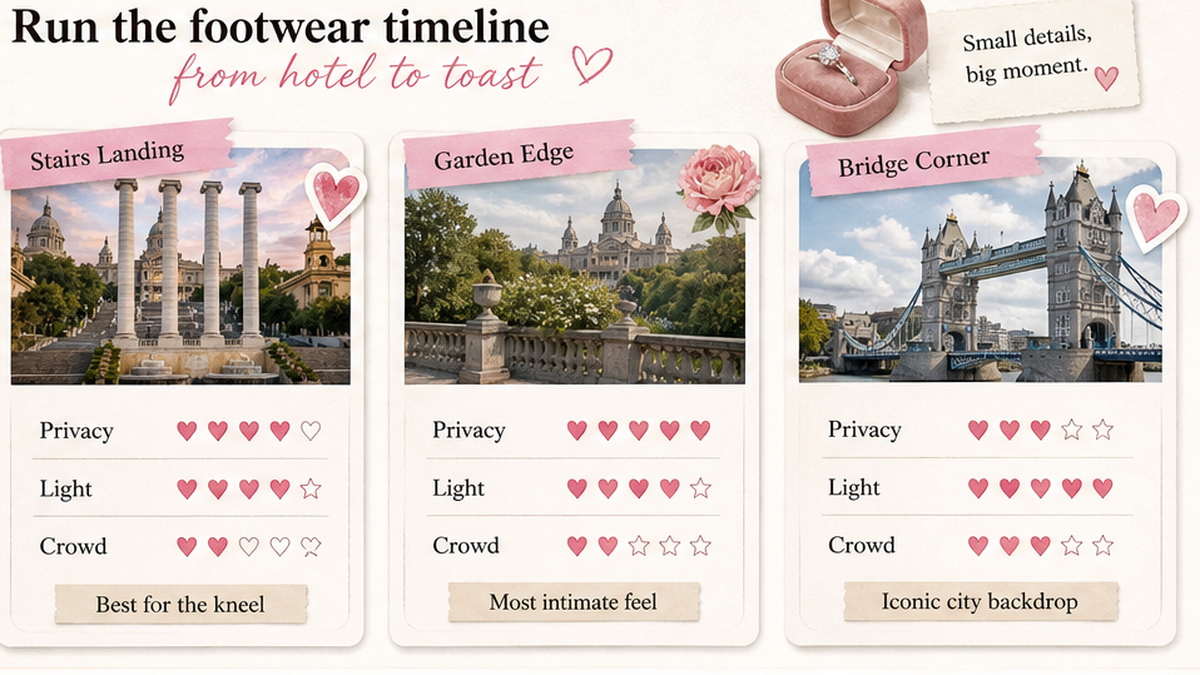
Run the footwear timeline from hotel to toast
- T-evening before: Lay out approach pairs, dinner upgrade shoes, and blister kit. Confirm both pairs fit after a full day of walking earlier in the trip—not only in the hotel mirror.
- T-120: Put on approach shoes. Helper packs the dinner pair and kit. Tell the helper the swap location in one sentence (cafe toilet, hotel drop, restaurant host stand).
- Cover-story walk: Keep pace conversational. If a hot spot starts, pause for tape before the last viewpoint stairs—not at the pin while the photographer waits.
- Pin approach: Proposer checks sole grit quickly if needed, then hands free for the ring path. No shoe adjustments in the final 30 seconds.
- Exit to dinner: Use the planned swap. Prefer a calm indoor corner over changing shoes in a crowded plaza where the surprise afterglow becomes a sidewalk struggle.
- Aftercare: If an ankle feels wrong, shorten the celebration walk and take a taxi. Protect the evening rather than pushing through for one more overlook.
FAQ
Should we both wear sneakers to the pin?
Often yes for cobble-heavy or uphill pins. Style can wait for the dinner swap. A clean trainer usually photographs better than a limp.
What if my partner insists on heels the whole day?
Choose a low block heel they have already worn for hours, shorten the walk, and use taxi drop-offs for the last segment. Do not invent a marathon in new stilettos.
Do I need special kneel shoes?
No costume required. You need grip, break-in, and ankle calm. Soft-knee pads are optional and usually unnecessary if the surface is dry stone or a clean terrace.
Where should the helper carry the dinner shoes?
In a small tote or backpack already part of the cover story—not a branded shoe box. Agree the handoff spot during scout day.
What if rain makes stones slick right before the pin?
Slow the approach, favor rubber tread, and consider a covered Plan B pin from your rainy-day checklist rather than forcing a wet overlook.
Fact-check notes
- Historic centers often combine uneven paving, camber, and sudden steps; footwear choice is a logistics control, not a fashion afterthought.
- Blisters and ankle rolls are common walking-tour failure modes; fixing them early preserves photographer windows and dinner reservations.
- A shoe swap near the restaurant is a standard event-week tactic; it is not a guarantee against slips on any specific street.
- This is practical planning guidance, not medical advice. Seek care for true injuries instead of walking them off for photos.
Related reading
Pair this with Barcelona proposal stairs, hills, and mobility buffer 2026 so footwear and route elevation are planned as one system.
Want a planner to lock approach shoes, dinner swaps, blister kits, and pin-ready footing around your timeline? Plan My Proposal.