Barcelona proposal pins often sit above stairs, cobbles, and steep approaches – Bunkers, Montjuïc terraces, Gothic Quarter climbs, and park paths that look short on a map. This checklist treats elevation and mobility as day-of logistics so the ask arrives with steady breath, safe footing, and a flat Plan B if the climb is wrong for your group.
If the approach leaves anyone winded, unstable, or annoyed before the ring comes out, the view has already lost. Lock a realistic climb, a recovery pocket, and a flatter backup before you commit.
Measure the approach, not just the viewpoint
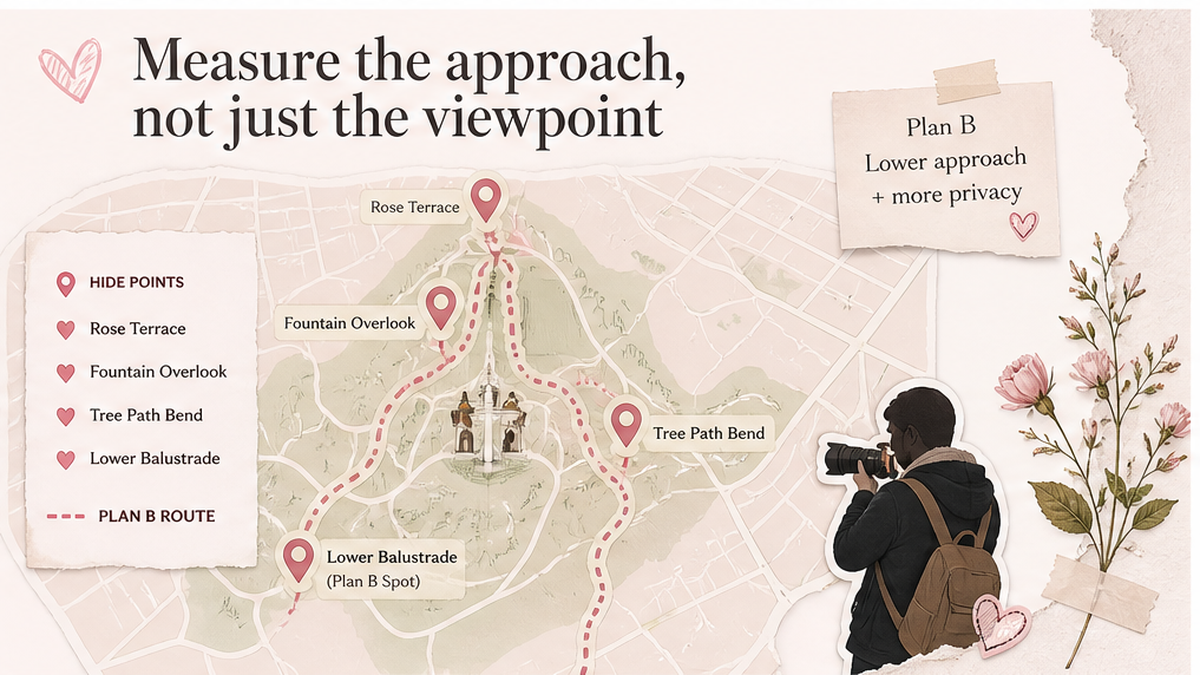
Scout the full walk from the last taxi drop, metro exit, or dinner door to the exact ask stance. Map distance lies when the route is stairs and uneven stone.
- Count real segments: stairs flights, steep ramps, cobble stretches, and any gate or ticket queue before the pin.
- Time it twice: once at an easy pace, once at the pace you will use on proposal day with dress shoes or a longer outfit.
- Note recovery space: a flat railing-free pocket 30–90 seconds before the ask where breathing and posture can reset.
- Hard avoid: an ask at the top of a climb with no flat footing, or a path that forces walking backward into traffic or a drop.
On scout day, wear the same shoe type you plan for the ask. If either of you would hesitate on that surface in those shoes, change the pin or change the approach.
Build a mobility buffer into the timeline
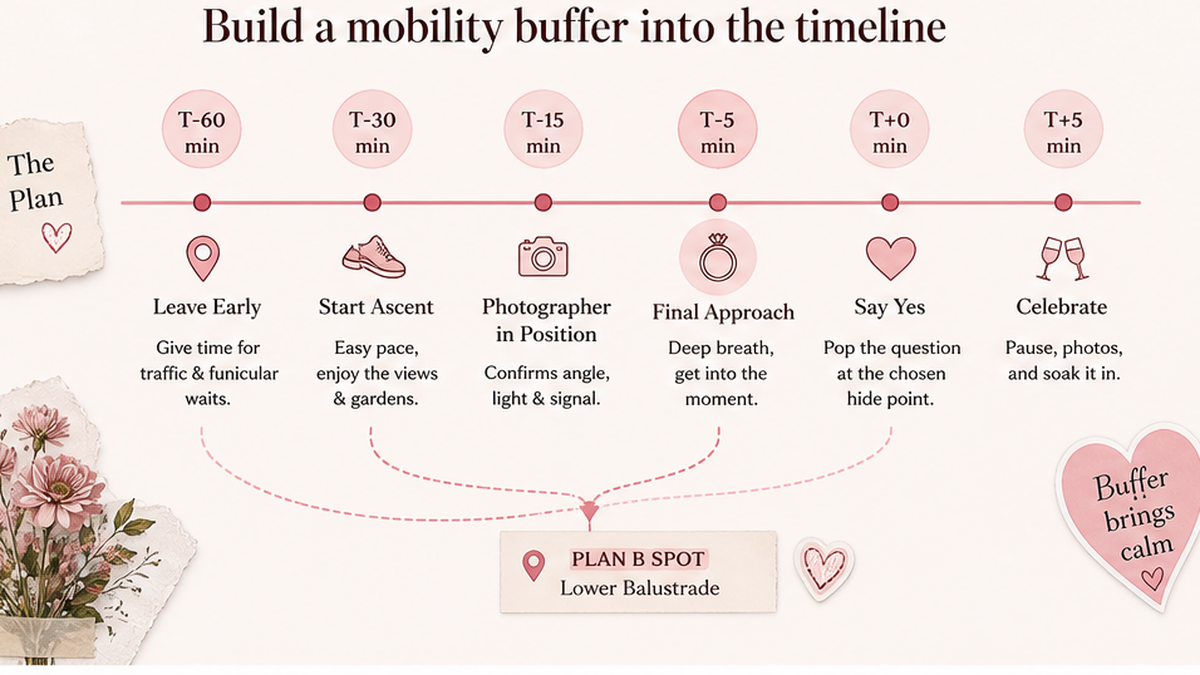
| Plan element | Strong default | Why it protects the ask |
|---|---|---|
| Approach budget | Scouted walk time + 8–12 minutes buffer for crowds, photos stops, and breath recovery | Stops rushing the last stairs and fumbling the ring while winded |
| Drop-off point | Closest legal taxi or rideshare curb that still leaves a short, known final walk | Avoids a surprise long climb after a late transfer |
| Outfit check | Shoes and hem length tested on the actual surface; spare flats in a bag if needed | Prevents slips, snags, and mid-climb outfit fixes |
| Photographer position | Hidden on flat ground with a clear exit; not perched on an unsafe ledge | Keeps the capture team stable while you plant for the ask |
| Abort / Plan B | Pre-chosen flatter pocket nearby (terrace entry, wide viewpoint lower down, lit plaza) | Lets you keep the moment if stairs, wind, or fatigue make the summit wrong |
Run the climb window without spoiling the surprise
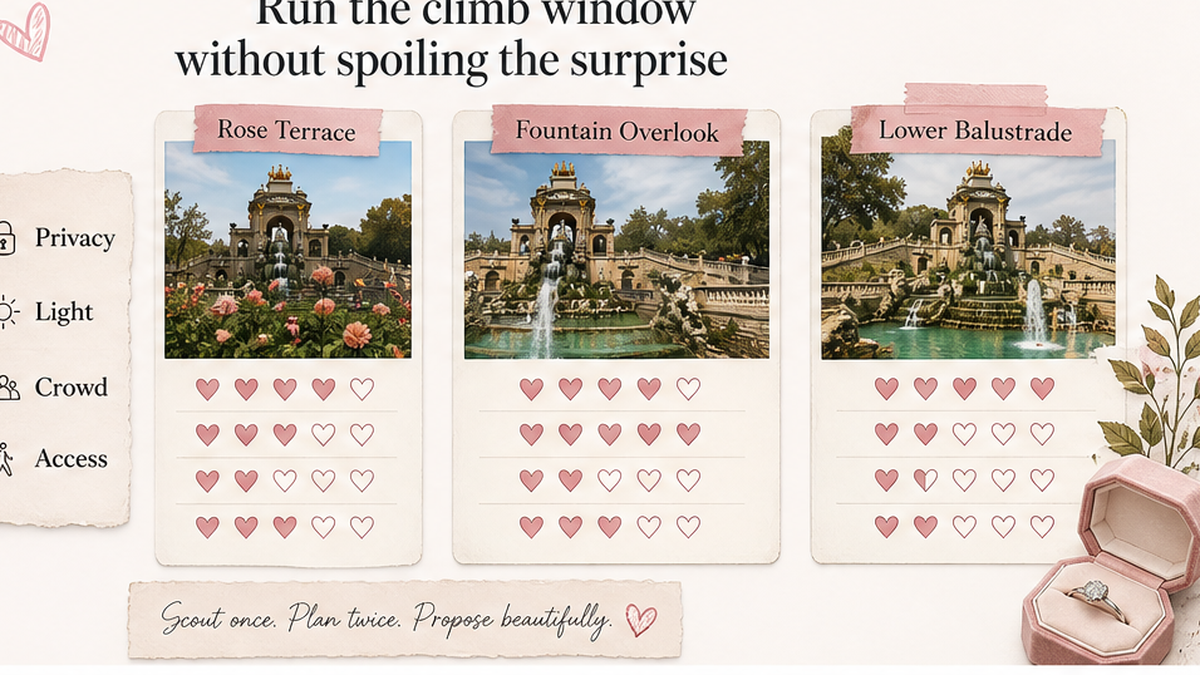
- T-30: Confirm drop-off, water, and that both of you are comfortable continuing. If someone is already struggling with heat or footwear, switch to the flatter Plan B early.
- T-15: Start the approach at a conversational pace. Do not race “to beat the light” up stairs; that shows on faces and voice.
- T-5: Use the recovery pocket. Pause for a view comment, a sip of water, or a shoe adjustment so breath and posture settle.
- Pin: Plant on flat, predictable footing. Open the ring only after your feet are set and you can speak without gasping.
- Exit: Prefer a downhill or side path you already walked. Do not invent a steeper “scenic” descent after the yes.
Choose a flatter Plan B that still feels intentional
- A lower terrace or plaza with the same neighborhood story as the summit pin.
- A short indoor-to-outdoor handoff from a restaurant or hotel with elevator access.
- A waterfront or wide street pocket with level stone and easy taxi egress.
- Skip “secret” climbs that require scrambling, poor lighting, or single-file ledges.
Tell your photographer and any helpers the Plan B pocket and the simple cue word if you abort the climb. Surprise is fine; improvising unsafe stairs is not.
FAQ
Are Bunkers or steep viewpoints automatically a bad idea?
No – they can work if the approach time, footing, footwear, and recovery pocket are real. They fail when the ask is rushed at the top of an untested climb.
How much buffer should I add for stairs?
Use your scouted walk time, then add roughly 8–12 minutes for crowds, breath recovery, and small delays. More if anyone is jet-lagged, in formal shoes, or carrying a long outfit.
What if my partner hates hills?
Do not make the climb the surprise. Choose a flatter pin, or frame the walk as a short known stroll with a clear payoff and an easy exit.
Should the photographer climb with us?
Only if they have a safe hide and flat shooting ground. A photographer stuck on a ledge helps nobody.
Is elevator or funicular access worth planning?
Yes when it cuts a punishing approach without killing the story. Confirm hours and queues on scout day so the “easy” route is actually open.
Fact-check notes
- Approach times vary by crowd, heat, footwear, and exact route; re-time close to your date if you scouted weeks earlier.
- Viewpoint access, gates, and transport links can change; verify opening hours and the last legal drop-off for your pin.
- This is practical logistics guidance, not medical or accessibility certification for a specific venue.
- If footing feels unstable or either person is winded at the recovery pocket, relocate. A steady flatter ask beats a gasping summit.
Related reading
Pair this with Barcelona proposal summer heat and golden-hour stamina checklist 2026 so climb load and heat load are planned together.
Want a planner to lock a realistic approach, recovery pocket, and flatter backup? Plan My Proposal.