A Barcelona proposal champagne toast fails on the handoff, not the bottle. The flute appears too early, a waiter announces “congratulations,” or the cork pops while your partner is still walking into the pin. This runbook treats champagne as timed logistics: who holds it, when it appears, how staff stay quiet, and what you do if the bottle is warm, missing, or spoiled by a crowd.
Stage the toast after the yes. If the pour starts before the ring, the surprise is already gone.
Decide what the toast must do
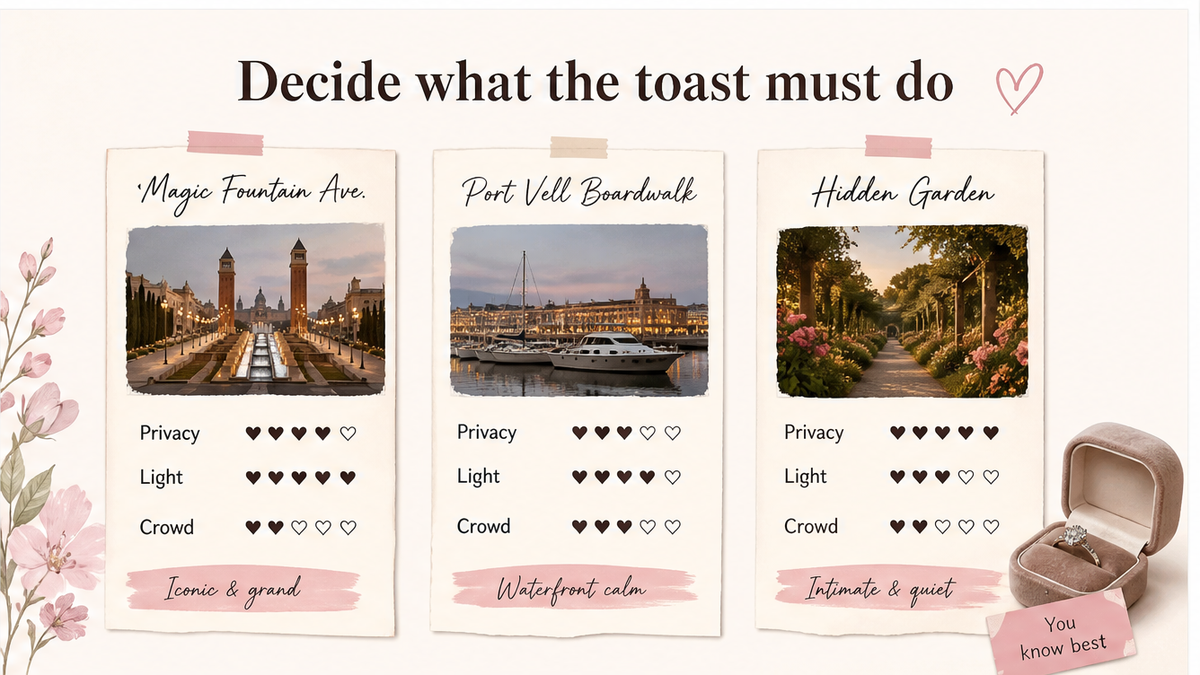
Write the job of the champagne before you order a bottle or brief a waiter. Vague “something celebratory” is how you get a loud public pour at the wrong minute.
- Private after-ask toast: two glasses appear only after the ring, for you and your partner.
- Photo prop: short pour for stills, then clear the table so the moment does not become a bar service.
- Friends join-in: witnesses arrive with a second bottle after your READY text – not before.
- Hard stop: the latest minute you will still propose if champagne cannot appear at all.
If the toast is optional decoration, say so. Optional jobs should never block the proposal pin.
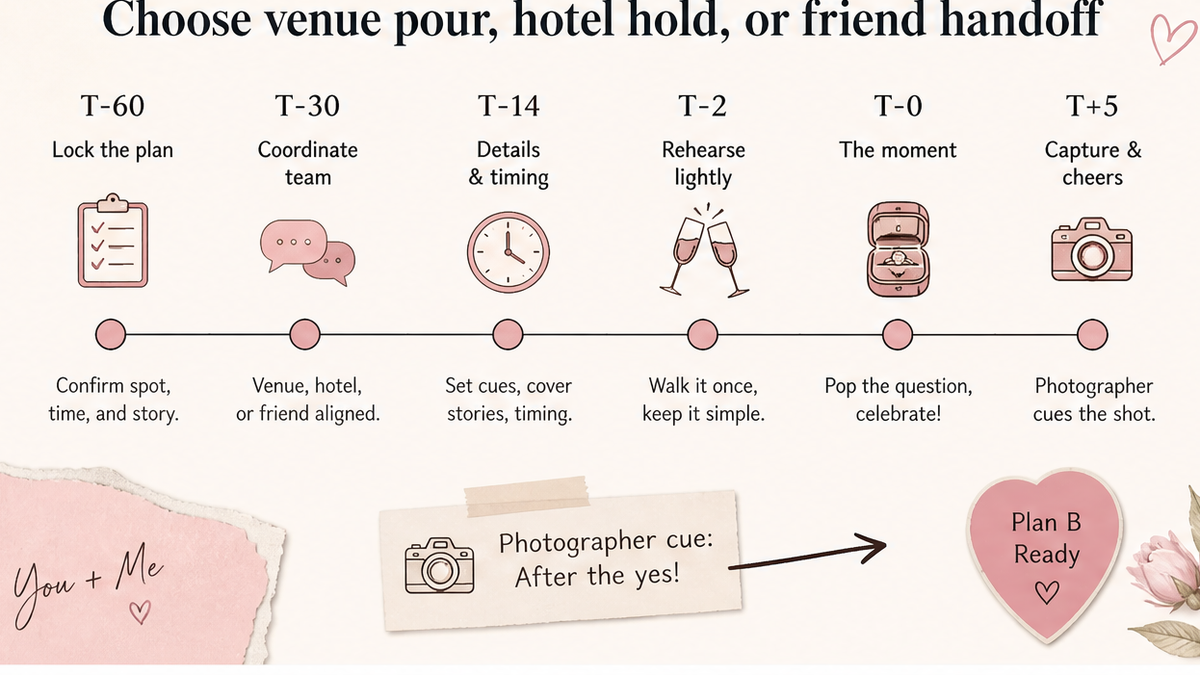
Choose venue pour, hotel hold, or friend handoff
| Option | Best when | Main risk |
|---|---|---|
| Restaurant or rooftop staff pour | Dinner or terrace booking with a named server | Staff announce the occasion or bring glasses early |
| Hotel concierge / room hold | You leave the hotel for a nearby pin, then return or meet a runner | Shift change loses the hold; partner sees the ice bucket in the room |
| Trusted friend with a bag | Public pin, park edge, or quick exit to a quiet corner | Warm bottle, broken glass, or friend cheering too soon |
For most surprise proposals, a pre-briefed venue pour with a written cue and a friend-held backup is cleaner than improvising a street cork pop.
Brief that keeps staff quiet
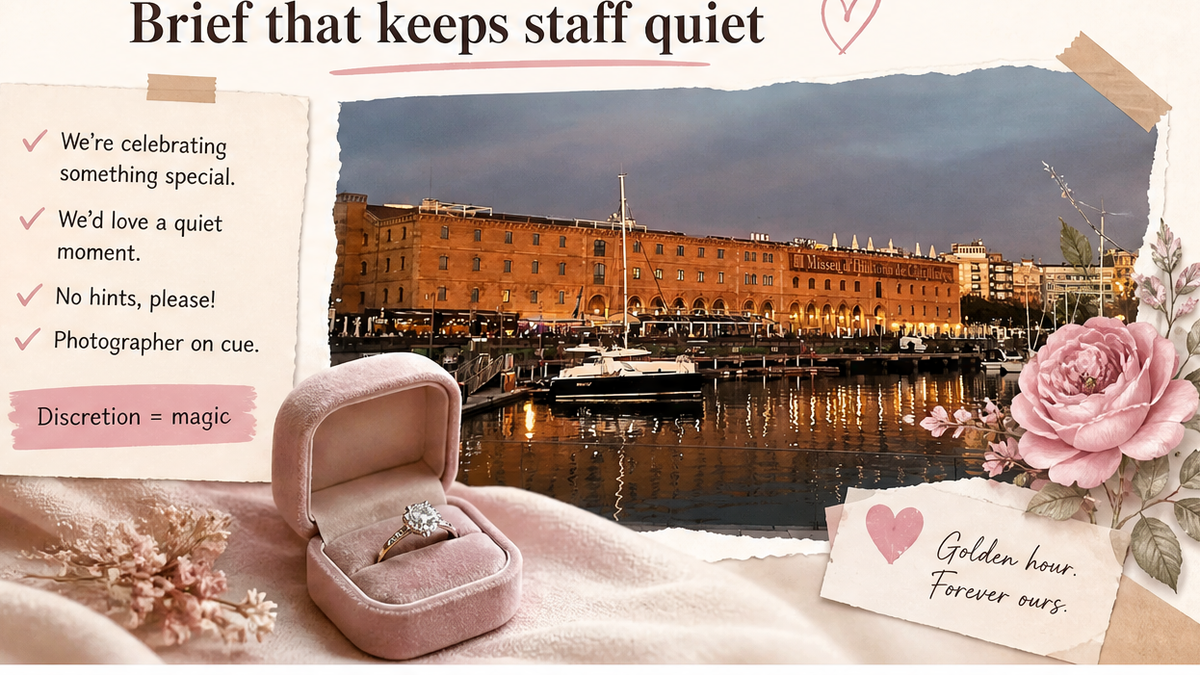
Give staff a script, not a vibe. Do this privately the day before when possible, then reconfirm on the day.
- Name the table or terrace pin and the proposal window (start time and hard stop).
- State the cue: a WhatsApp READY code, a hand signal, or “after we sit and I nod.”
- Write the no-spoiler line: “Please do not say proposal, engagement, or congratulations until we ask.”
- Specify glass count (usually two), whether to open at the side station, and whether cork noise is allowed.
- Ask who works that window and leave a tip envelope for that person if the property allows it.
- Confirm a mute Plan B: water or dessert if champagne stock, ice, or service fails.
Temperature, timing, and glass logistics
Cold bottles and clean glasses are logistics, not romance. Lock them the same way you lock a taxi window.
- Chill window: ice the bottle 20–40 minutes before the cue, or keep it in a hold fridge – not on the table during the walk-up.
- Open off-pin: prefer a side station or corner so the cork does not gather strangers.
- Glass placement: arrive after the ask, or stay covered under a napkin until your cue.
- Spill kit: one napkin stack and a quiet clear path so a tippy flute does not end the moment.
- Alcohol optional: have a non-alcoholic pour ready if either of you is not drinking.
Day-of champagne checklist
- Morning: reconfirm hold location, server name, and READY code with venue or friend.
- Scout buffer: know a quiet backup corner if the terrace fills or wind makes outdoor pours messy.
- T-60: verify bottle is chilled and glasses are staged out of sight.
- T-15: send a silent status check (“holding”) – do not discuss the proposal in front of your partner.
- Ask first: ring down, then cue the pour. Never reverse that order.
- After yes: one short toast, photo if planned, then clear glasses so friends or music can enter cleanly.
Plan B when champagne collapses
- No bottle / warm bottle: skip the pour; propose on time with water or dessert.
- Staff spoils the surprise: move the ask to your scouted Plan B pin immediately.
- Crowd gathers on the cork: abort the toast, keep the private yes, celebrate later at dinner.
- Partner does not drink: switch to the non-alcoholic backup without announcement.
- Glass breaks: step aside, reset, and do not force a second public pour.
The proposal succeeds when the ask happens. Champagne is a bonus layer, not the gate.
FAQ
Should champagne arrive before or after the ring?
After. Pre-set flutes telegraph the plan and pull attention to service instead of the ask.
Can I bring my own bottle to a Barcelona restaurant?
Some venues allow corkage, many do not. Ask privately when you book, and keep a venue bottle as backup.
Is a public cork pop a good idea on a viewpoint?
Usually no. Noise and glass attract crowds. Prefer a quiet corner, terrace booking, or toast after you leave the pin.
What if I only want photos with glasses?
Stage an empty or lightly poured prop after the yes, shoot for two minutes, then clear. Do not run a full service during the reaction.
Fact-check notes
- Venue alcohol service, corkage, and terrace rules in Barcelona vary by property and booking.
- Staff discretion is not guaranteed – written no-spoiler cues beat verbal-only requests.
- This is logistics guidance for surprise timing and handoffs, not a guarantee about any restaurant, hotel, or public drinking rule.
- Weather, wind, and crowds can make outdoor pours messy; always keep a no-champagne Plan B.
Related reading
Pair this with Barcelona proposal dinner reservation checklist if the toast is tied to a booked table and a privacy note for the server.
Want a planner to brief the pour, lock the READY cue, and keep a mute Plan B ready? Plan My Proposal.